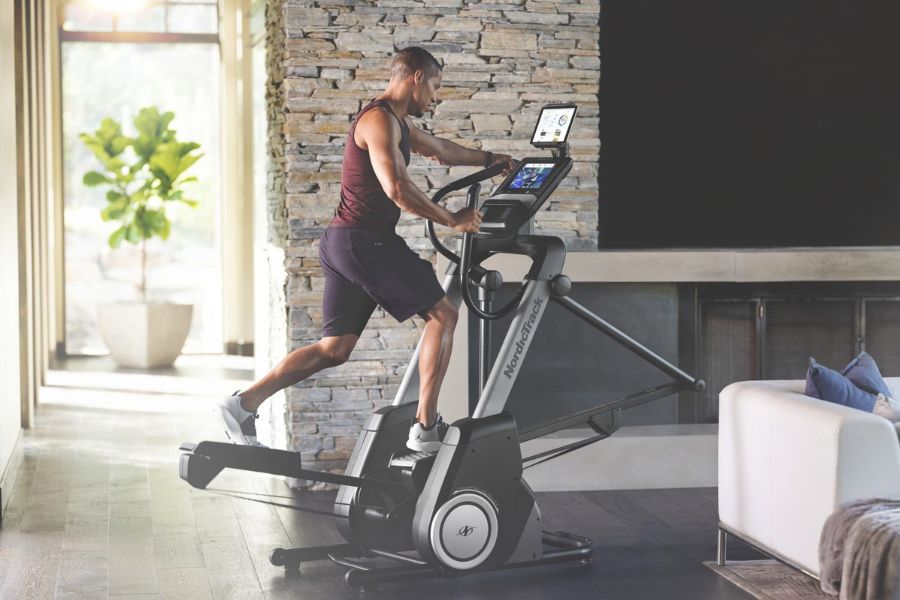
An elliptical workout for seniors can be one of the simplest ways to protect your joints, build strength, and improve your heart health at the same time. Instead of pounding your knees and hips on pavement, you glide in a smooth, supported motion that still challenges your muscles and lungs. That is why many senior fitness programs highlight the elliptical as a go-to cardio option for older adults with sensitive joints or arthritis (Space Cycle).
Below, you will find how elliptical workouts help you stay strong and fit, how to choose the right machine, and a step by step beginner-friendly routine you can start this week.
Understand why ellipticals are senior friendly
Ellipticals are designed to be easier on your body while still giving you a complete workout. Instead of lifting and striking your feet with each step, your legs follow a guided, oval-shaped path that supports your weight and reduces impact.
This low impact motion means less strain on your knees, hips, and ankles compared with running or even fast walking on a treadmill. That makes an elliptical workout for seniors especially useful if you live with arthritis, past injuries, or general joint stiffness (Verywell Fit, Fitscope Studio).
At the same time, the pedals still support your body weight, which turns your session into gentle weight bearing exercise. Weight bearing activity is important later in life because it helps maintain bone density, muscle and connective tissue, and can lower your risk of osteoporosis (Verywell Fit).
Know the main health benefits
A regular elliptical routine touches almost every part of your health, from your heart to your balance.
Stronger heart and better circulation
Ellipticals make it easy to reach a cardio level that benefits your heart and lungs without forcing you to move at a sprint. You can keep a steady, moderate pace that still challenges you.
Using an elliptical consistently can improve blood flow, help lower blood pressure and cholesterol, and reduce your risk of heart disease (Fitscope Studio, TRUE Fitness). This aligns with public health guidelines that suggest at least 150 minutes of moderate exercise per week for adults of all ages, including seniors (CNET).
Low impact strength training
You are not only getting cardio when you step on an elliptical. The resistance feature turns each stride into a strength move for your legs and glutes. If your machine has moving handles, your arms, shoulders, chest, and back work as well, along with your core to keep you stable.
As a result, you get a full body strength session without switching equipment. Regular use targets major muscle groups such as glutes, quads, hamstrings, calves, arms, and back, which can improve muscle tone and help your body burn calories more efficiently (Fitscope Studio, TRUE Fitness).
Better balance and lower fall risk
Strong legs and a stable core are two of your best defenses against falls. An elliptical challenges both. As your muscles adapt, you may notice steadier steps during daily activities like climbing stairs or carrying groceries.
Elliptical workouts are shown to improve balance and coordination by strengthening the muscles in your core, back, and lower body that keep you upright. The handles give you an extra point of support while you train these systems safely (Fitscope Studio, TRUE Fitness).
Over time, a consistent elliptical routine can help you feel more confident moving through your day, not just more fit during your workout.
Choose the right elliptical for you
The best elliptical workout for seniors starts with a machine that fits your body and comfort level. A few details matter more than others.
Focus on stride length and stability
Stride length describes how far your feet travel with each revolution. If the stride is too short, your movement feels choppy. If it is too long, your hips and knees may feel stretched.
Experts suggest that a stride length around 20 inches works well for many people between 5’3″ and 6’0″ tall, but your comfort should guide you (BarBend). When you test a machine, your steps should feel smooth and natural without overreaching.
Stability and weight capacity are just as important. Look for a solid, wide base with little wobble and a weight rating that comfortably exceeds your own, often in the 300 pound range or higher for home ellipticals (BarBend).
Look for senior friendly features
Many programs geared toward older adults recommend features that make your workouts safer and more comfortable, such as a wide non slip base, padded pedals, ergonomic handles, and clear controls (Space Cycle). Simple consoles and remote controls can be much easier to manage than complicated touch screens.
Some senior focused models arrive fully assembled, use very quiet drive systems, and include anti slip pedals to support users with arthritis or who are recovering from surgery (Harison Fitness).
Adjustable resistance and incline settings are helpful as well. They let you fine tune intensity and shorten or lengthen the feeling of your stride without stressing your joints (CNET).
Consider seated and compact options
If standing for long periods is difficult, a recumbent or seated elliptical might be a better match. For example, the Teeter FreeStep LT3 combines a recumbent cross trainer with an elliptical to provide a very low impact, seated workout that reduces stress on your knees, hips, and back. It also offers simple controls and adjustable seating, which can be ideal if you have mobility challenges (CNET).
For very small spaces or for use while seated at a desk or on the couch, compact under desk ellipticals like the Cubii Move or Cubii Total Body Smart Seated Elliptical give you a light, low impact workout with minimal setup. Some even add resistance handles so you can include your upper body while remaining seated (BarBend, CNET).
Start with a gentle beginner routine
If you are new to elliptical training, you do not need long or intense sessions to see benefits. The key is to start short and build gradually so your muscles and joints can adjust.
Several senior focused programs suggest beginning with 10 to 15 minutes per session, 3 or 4 times per week, then working up to 20 to 30 minutes as you feel stronger (Verywell Fit, Harison Fitness, Space Cycle).
Here is a simple 20 minute beginner elliptical workout for seniors you can try, assuming your doctor has cleared you for exercise:
-
Warm up, 3 to 5 minutes
Set resistance and incline to very low. Move at a relaxed pace that feels easy. You should be able to talk without effort and feel your body slowly warming. -
Build to moderate effort, 5 minutes
Raise resistance slightly until your breathing becomes deeper but steady. On a 1 to 10 effort scale, aim for around 4 to 5, which is considered moderate intensity. You should still be able to speak in full sentences without gasping (Verywell Fit). -
Light interval section, 8 minutes
Alternate 1 minute slightly harder with 1 minute easier:
- Harder minutes at an effort level of 5 to 6
- Easier minutes back at 3 to 4
Keep your posture tall, use the handles if they feel comfortable, and keep your steps smooth and controlled.
- Cool down, 2 to 4 minutes
Reduce resistance back to very low and gradually slow your pace. Let your heart rate and breathing come back toward normal.
If 20 minutes feels like too much at first, start with 10 minutes and add 2 to 3 minutes per week. Beginners, including seniors, are encouraged to progress this way to avoid soreness and injury (Verywell Fit).
Use smart safety and form tips
A well planned elliptical workout for seniors should always prioritize safety. Small habits can make your sessions more comfortable and effective.
Start each workout with a short warm up off the machine, such as gentle ankle circles, shoulder rolls, and a few minutes of easy walking around your home. This prepares your joints and muscles so the first strides on the elliptical feel smoother.
When you step on the machine, hold the stationary handles while you find your footing. Keep your feet flat on the pedals, distribute your weight evenly, and stand tall with your chest open. Avoid leaning heavily on the handles, which can strain your wrists and reduce the work your legs and core should be doing.
During your workout, keep your gaze forward rather than down at your feet. This simple change improves posture and can enhance balance. If your machine has moving arms, grip them lightly so your upper body works without tensing your shoulders.
Finally, pay attention to how your joints feel. You should notice effort in your muscles, not sharp pain in your knees, hips, or back. If discomfort appears, reduce resistance or stop and check your form. Seniors with severe joint damage or recent surgery should only use an elliptical under medical guidance (Harison Fitness).
Support your workout with extras
Elliptical training covers a lot of ground, but a few simple additions can help you get even more from your efforts.
Programs for older adults often recommend pairing elliptical sessions with light strength training for your upper and lower body, plus regular stretching. These extra exercises boost muscle strength, flexibility, and can further reduce your risk of injury (Space Cycle).
On non elliptical days, you might:
- Do body weight squats to a chair or gentle wall sits
- Use light dumbbells or resistance bands for biceps curls and shoulder presses
- Stretch your calves, hamstrings, and chest after a short walk
No matter which extras you choose, remember the basics. Drink water before and after workouts, wear supportive shoes, and give yourself time for an easy cool down. Listening to your body and resting when needed is part of what keeps you consistent over the long term.
Putting it all together
An elliptical workout for seniors does not have to be complicated to be effective. A comfortable machine, a realistic schedule, and modest intensity are enough to support your heart health, muscle strength, balance, and overall energy.
You might start with just 10 minutes a few times a week, focusing on smooth, pain free motion and moderate effort. As your fitness improves, you can extend your sessions toward 20 or 30 minutes, add gentle intervals, or increase resistance little by little.
Try one short workout in the next few days using the beginner routine above. Notice how your joints feel during the gliding motion and how your body feels afterward. With steady practice, those small sessions can add up to a stronger, fitter you at any age.