A dash diet plan is one of the most researched and practical ways to improve your health without buying special foods or following complicated rules. It was originally created to help lower high blood pressure, but it can also support healthy weight loss, better cholesterol, and long term heart health.
If you are looking for an eating pattern that is flexible, family friendly, and realistic to follow, the DASH diet plan is a strong choice backed by decades of science.
What the DASH diet plan actually is
DASH stands for Dietary Approaches to Stop Hypertension. It is an eating pattern that focuses on whole foods and specific daily and weekly goals instead of rigid menus.
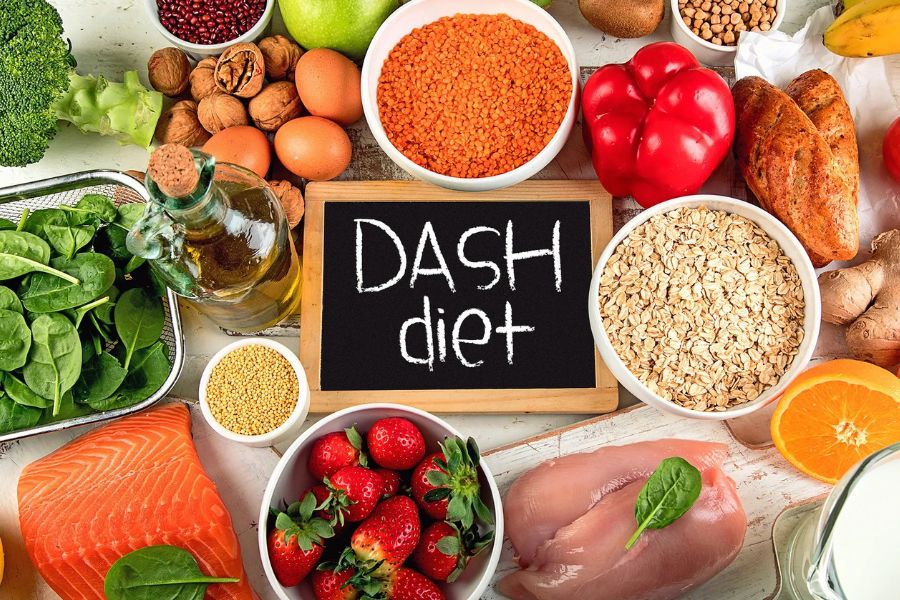
According to the National Heart, Lung, and Blood Institute, the DASH eating plan lays out daily and weekly nutritional targets for a 2,000 calorie diet and does not require special products or hard to find ingredients (NHLBI). You build your meals from regular foods you already know, such as:
- Vegetables and fruits
- Whole grains
- Low fat or fat free dairy
- Fish and poultry
- Beans, lentils, and nuts
At the same time, you limit foods that are high in sodium, added sugar, and saturated fat, which aligns with guidance from the Mayo Clinic (Mayo Clinic).
Why the DASH diet is so good for your health
You may be wondering why the dash diet plan is recommended so often. The short answer is that it has been carefully studied for about thirty years and repeatedly shown to work in real people.
Helps lower blood pressure
The DASH diet was designed to prevent and treat high blood pressure. In the original DASH trial with 459 adults, people who followed the DASH diet had lower blood pressure than those eating a typical American diet, and the benefits appeared in just 8 weeks (NHLBI).
A later study called DASH Sodium took it a step further. It found that combining the DASH diet with reduced sodium intake, as low as 1,500 milligrams per day, produced the biggest drop in blood pressure, especially for people who started with higher readings (NHLBI).
The NHLBI also notes that a sodium target of 1,500 milligrams per day is more effective for lowering blood pressure than 2,300 milligrams, which is the upper limit in many general guidelines (NHLBI).
Supports your heart and cholesterol
Because the DASH eating pattern is rich in potassium, calcium, magnesium, protein, and fiber, and low in sodium and saturated fat, it naturally supports heart health. The Mayo Clinic highlights that DASH can help lower LDL cholesterol, the type linked to heart disease risk (Mayo Clinic).
Research funded by the NHLBI has also shown that following the DASH diet can reduce the risk of heart disease and improve lipid (cholesterol) panels overall (NHLBI).
Helps with weight loss in a realistic way
Even though the DASH diet plan was not created as a weight loss diet, it often leads to weight loss because you center your meals on high fiber, low energy density foods that keep you full for fewer calories.
In the PREMIER trial with 810 participants, people who followed the DASH diet along with counseling and more physical activity lost more weight and saw larger blood pressure drops over 6 months than those who received advice only or tried other interventions (NHLBI).
The NHLBI also notes that the plan can be adapted to your specific calorie needs and provides worksheets to help you compare what you currently eat to DASH serving targets (NHLBI).
In other words, you are not put on a crash diet. You reshape what is on your plate so your calories work harder for your health.
How the DASH diet works day to day
One of the strengths of the dash diet plan is its practicality. Instead of counting every gram, you use serving ranges from each food group based on your calorie needs.
For a 2,000 calorie version, Mayo Clinic and the NHLBI provide examples of how a day might look (Mayo Clinic, NHLBI):
| Food group | Typical daily target (2,000 calories) |
|---|---|
| Grains (mostly whole) | 6 to 8 servings |
| Vegetables | 4 to 5 servings |
| Fruits | 4 to 5 servings |
| Low fat dairy | 2 to 3 servings |
| Lean meat, fish, poultry | Up to 6 ounces |
| Nuts, seeds, legumes | 4 to 5 servings per week |
| Fats and oils | 2 to 3 servings |
| Sweets | 5 or fewer per week |
Your exact numbers will vary if you need more or fewer calories. The NHLBI offers tools to help you match your personal needs to these serving patterns (NHLBI).
Why the DASH diet is easier to stick with
If you have tried strict diets before, you know that sustainability matters more than quick results. The dash diet plan is easier to live with for several reasons.
No special products or complicated rules
You do not have to buy packaged “diet foods.” The NHLBI emphasizes that DASH can be followed entirely with everyday groceries and does not rely on special products (NHLBI). You can shop at your usual store, cook simple meals, and eat with your family.
You also do not cut out entire food groups. You still eat grains, dairy, and fats, but you shift the type and amount so they support better health.
Flexible and customizable
Because you are working within food groups and serving ranges, you can tailor DASH to your preferences, culture, and budget. Enjoy spicy food, vegetarian meals, or simple batch cooking? You can build all of those into your version of the plan.
Studies such as OmniHeart have even experimented with slightly adjusting the macronutrient balance of DASH. When some carbohydrates were replaced with protein or healthy fats, participants saw further improvements in blood pressure and cholesterol, while keeping the general DASH structure intact (NHLBI).
This flexibility means you can lean a little higher protein or a little more plant based while staying true to the main DASH principles.
Recognized and trusted
The DASH diet has been repeatedly recognized as a top choice for heart health. The NHLBI notes that it was named “Best Heart-Healthy Diet” and “Best Diet for High Blood Pressure” in 2025, which reflects its strong evidence base and real world results (NHLBI).
You are not experimenting with a fad. You are using an approach that has been carefully tested with thousands of people over decades.
How to start the DASH diet without feeling overwhelmed
You do not have to switch your eating pattern overnight. In fact, both the NHLBI and Mayo Clinic suggest gradual changes so your taste buds and habits have time to adjust (NHLBI, Mayo Clinic).
Step 1: Focus on vegetables and fruits
Start by adding, not removing. For the first week or two, aim to:
- Add one vegetable side at lunch and dinner
- Swap one snack for a piece of fruit or a small bowl of berries
Once this feels normal, you can work toward the DASH goal of 4 to 5 servings of vegetables and 4 to 5 servings of fruit most days.
Step 2: Switch to whole grains
Next, look at your grains. Choose whole grain versions of foods you already eat:
- Whole wheat or sprouted bread instead of white
- Brown rice or quinoa instead of white rice
- Oatmeal in place of sugary breakfast cereal
Whole grains are a key part of DASH because they provide fiber, magnesium, and other nutrients that support blood pressure control (Mayo Clinic).
Step 3: Lighten up your proteins and dairy
Gradually shift toward lean proteins and lower fat dairy:
- Choose skinless chicken or turkey, fish, and beans more often than red meat
- If you eat red meat, keep portions small and enjoy it less frequently
- Switch to low fat or fat free milk, yogurt, and cheese as suggested by Mayo Clinic and the DASH guidelines (Mayo Clinic)
These changes help you lower saturated fat and support your heart.
Step 4: Reduce sodium slowly
You might not realize how much of your sodium comes from packaged and restaurant foods. The DASH plan encourages you to gradually reduce salt and let your taste adjust over time (Mayo Clinic).
You can:
- Cook more at home and use herbs, spices, citrus, and vinegar for flavor
- Rinse canned beans and vegetables to remove some of the sodium
- Choose products labeled “no salt added” or “low sodium” when possible
- Taste food before you reach for the salt shaker
Aim to work your way toward the DASH sodium target of 1,500 to 2,300 milligrams per day, depending on your health needs and your doctor’s advice (NHLBI).
Using DASH specifically for weight loss
If weight loss is one of your main goals, you can use the dash diet plan as your foundation and then fine tune your calories and portions.
A few practical strategies:
- Use the serving ranges in the DASH guidelines that match a slightly lower calorie level than you currently eat
- Pay extra attention to your portions of grains, added fats, and sweets, since these are easy to overeat
- Fill at least half your plate with vegetables at lunch and dinner to stay satisfied on fewer calories
- Combine DASH with regular physical activity, just as in the PREMIER trial, where people lost more weight and reduced blood pressure the most when they paired the diet with movement and counseling support (NHLBI)
Because DASH emphasizes nutrient dense, high fiber foods, you are less likely to feel deprived, which makes it easier to maintain your progress.
Key takeaways
If you want a way of eating that helps you lose weight, protect your heart, and lower blood pressure, the dash diet plan is one of your best options.
You get:
- A flexible pattern based on everyday foods, not special products
- Strong scientific evidence showing improvements in blood pressure, cholesterol, and weight
- Clear serving goals you can adapt to your own calorie needs and preferences
- A realistic path to cutting back on sodium and processed foods
You do not have to change everything at once. Start with one step, such as adding a vegetable to your next meal or swapping your usual bread for a whole grain version. Each small change moves you closer to the full benefits of the DASH eating plan.